 Marketplace SEO
How to Translate a Product Listing for Amazon & Noon—and Rank in New Markets
By Muhammad Nadeem · Blog #2
Updated
📖 9 min read · 1,873 words
Expanding your Amazon or Noon business into an Arabic-speaking market involves more than translating a few English sentences. Your product title, bullet points, description, keywords, measurements, tone, and selling points must all make sense to local shoppers.
Effective product listing translation combines accurate translation, marketplace SEO, and cultural localization. When handled correctly, it can help your product appear for relevant searches while giving shoppers the confidence to buy.
This guide explains how to translate Amazon and Noon listings for Arabic and GCC markets—without hiring a translator for every product.
For broader workflows, learn how to translate product descriptions without losing sales, then use the English-to-Arabic seller guide for RTL layout, bilingual keywords, and cross-channel catalog copy.
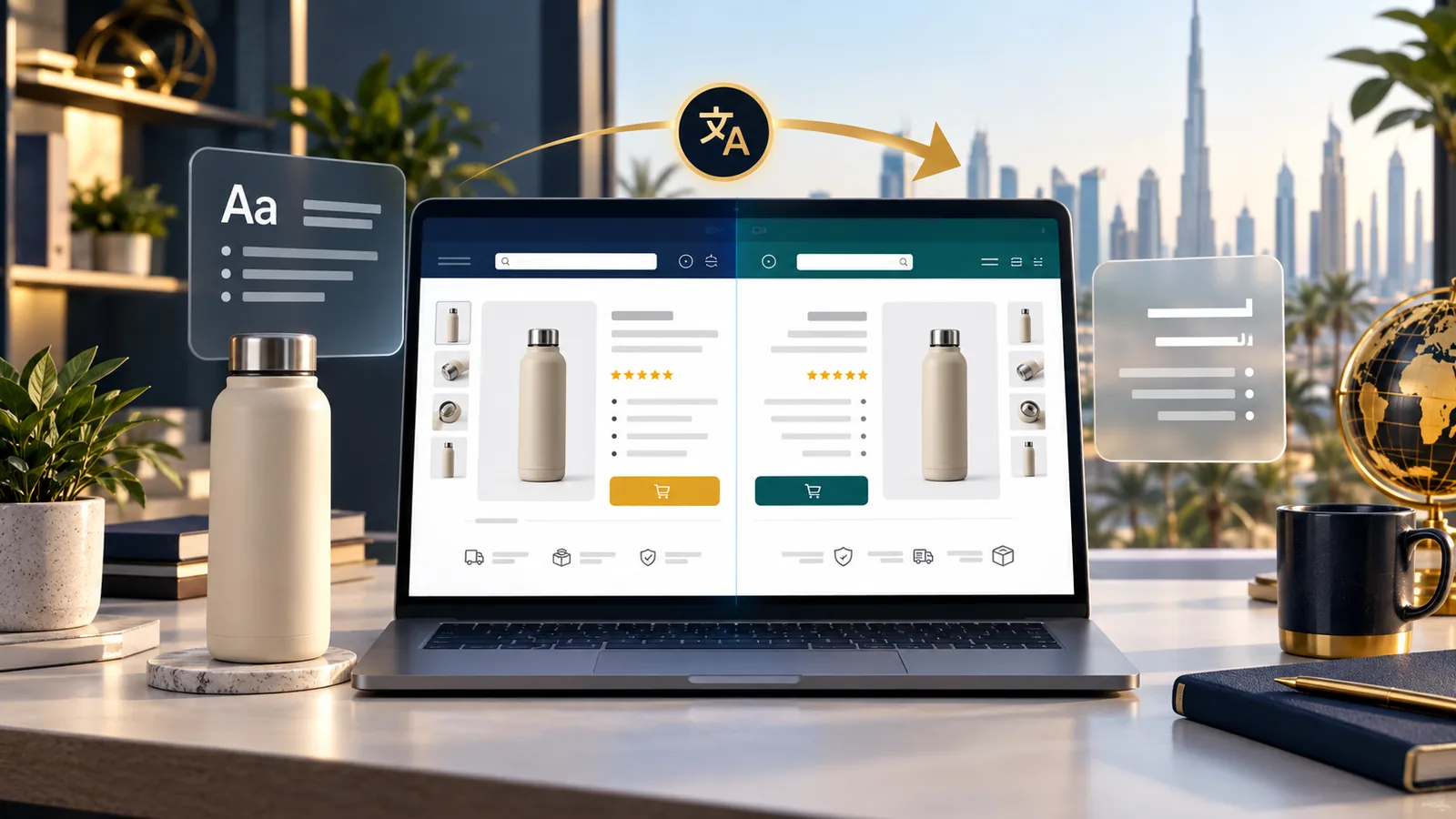
Translation vs. Localization: What Is the Difference?
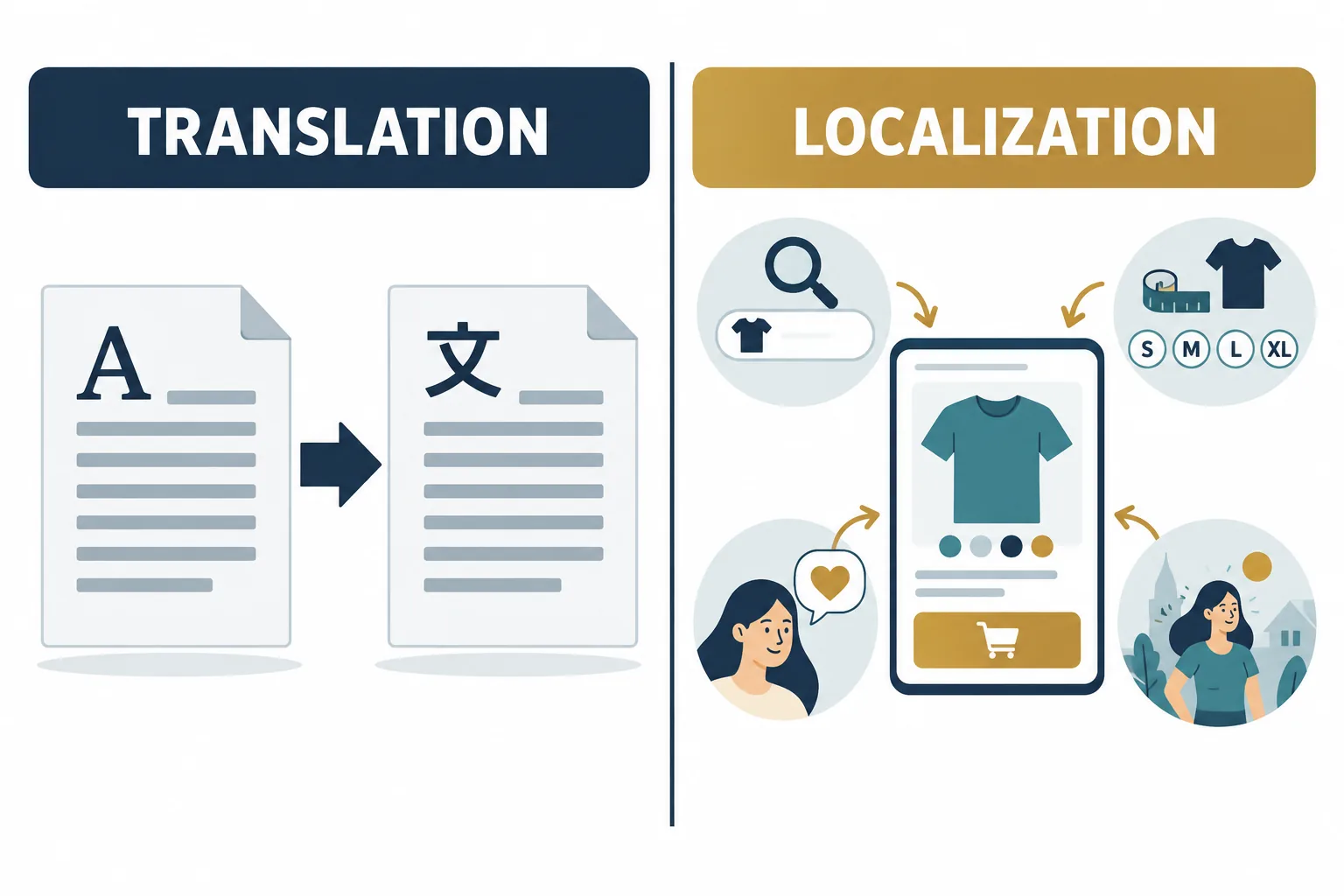
Translation changes content from one language into another. Localization adapts the entire listing to the language, culture, search behavior, and expectations of the target market.
A direct English-to-Arabic translation may preserve the original sentence but still sound unnatural to an Arabic-speaking customer.
Localization may require you to:
- Replace unfamiliar expressions with locally understood wording
- Use measurement units familiar to GCC shoppers
- Highlight features valued by local customers
- Adapt clothing sizes, electrical specifications, or compatibility information
- Include relevant Arabic search terms
- Preserve brand names, model numbers, and technical terminology
- Remove unsuitable, misleading, or unsupported claims
Your goal should not be to translate every word literally. It should be to preserve the correct product information while making the listing sound as though it was written for the local customer.
Why Product Listing Translation Affects Rankings and Sales
Marketplace search systems use listing information to understand what a product is and which searches it may be relevant for.
If your Arabic listing contains awkward wording, missing keywords, or incorrect terminology, it may struggle to appear for relevant Arabic searches. Even when shoppers find the product, unclear copy can reduce trust and conversions.
A properly localized listing can help you:
- Reach customers searching in Arabic
- Improve the relevance of your product page
- Explain product benefits more clearly
- Reduce misunderstandings and avoidable returns
- Build trust with customers across the GCC
- Maintain a consistent brand presence across marketplaces
Translation alone cannot guarantee a higher ranking. Price, availability, sales history, reviews, delivery performance, advertising, competition, and other factors may also affect marketplace visibility. However, accurate localization gives both the platform and the customer clearer information about your product.
How to Translate an Amazon or Noon Product Listing
1. Research the Target Market
Before translating your listing, decide exactly where the product will be sold. For Amazon.ae and Noon UAE, clear Modern Standard Arabic is generally more suitable for product listings than informal dialect. The language should still sound natural and familiar to GCC shoppers.
Research:
- How local customers describe the product
- Which product features competitors emphasize
- Common Arabic and English search terms
- Regional terminology
- Preferred measurements and sizes
- Category-specific marketplace requirements
Do not copy another seller's title or description. Use competitor listings only to understand terminology, customer expectations, and product positioning.
2. Build a Bilingual Keyword List
Do not translate your English keywords individually and assume Arabic shoppers use the same phrases. Start with your primary English keyword and identify:
- Its natural Arabic equivalent
- Alternative names for the product
- Singular and plural variations
- Material and color terms
- Product size or capacity
- Intended use
- Target customer
- Important compatibility terms
For example, a seller offering an insulated stainless-steel bottle may research keyword variations related to insulated water bottle, thermal bottle, stainless-steel bottle, school water bottle, sports water bottle, and hot and cold drink bottle.
Some GCC shoppers search in Arabic, others search in English, and many combine both languages. Use relevant variations naturally instead of repeating the same phrase throughout the listing.
3. Protect Information That Must Not Be Translated
Certain details should normally remain unchanged:
- Brand names
- Model numbers
- SKU codes
- Registered product names
- Device names
- Technical standards
- Part numbers
- URLs
- Trademarked terminology
Create a short "do not translate" list before processing the content. This prevents translation software from changing essential identifiers or spelling your brand differently across the listing.
4. Translate and Localize the Product Title
The title carries considerable SEO and conversion value. It should identify the product quickly while remaining readable. Depending on the category, a localized product title may include brand, product type, main feature, material, size or capacity, intended use, and color or quantity.
Avoid filling the title with repeated keywords, promotional language, unsupported claims, or decorative symbols. Do not force the Arabic title to follow the exact word order of the English title. The strongest Arabic version may need a different structure to sound clear and natural.
Use the Azan AI Product Translation Tool to translate complete product content while preserving its commercial purpose.
5. Localize Features and Bullet Points
Amazon bullet points and Noon product highlights should make the product's value easy to understand. Each point should communicate one main idea, such as the primary customer benefit, material or construction, size or capacity, compatibility, usage instructions, package contents, or care information.
Avoid translating English expressions literally. For example:
Weak version: "The ultimate game-changing bottle for every adventure."
Clearer localized version: "Double-wall insulated stainless-steel bottle designed to help maintain drink temperature during travel, work, and outdoor activities."
The second version provides specific product information without relying on vague promotional language.
For Arabic-focused listings, use the English-to-Arabic Product Translation Tool to create clearer product copy for GCC shoppers.
6. Translate the Product Description for Conversion
When sellers translate a product description, they often focus only on grammar. A marketplace description must also educate and persuade the customer. A useful localized description should answer:
- What is the product?
- Who is it designed for?
- What problem does it solve?
- What are its most important features?
- How should it be used?
- What is included in the package?
- Are there compatibility requirements or limitations?
Use short paragraphs and clear sections. Large blocks of text are difficult to scan, particularly on mobile devices.
If your translated copy sounds stiff, repetitive, or overly formal, use the Marketplace Description Rewriter to create a more natural marketplace-ready version.
7. Adapt Measurements, Sizes, and Technical Details
Small translation errors can lead to expensive returns and negative reviews. Verify every dimension, weight, capacity, voltage, plug type, clothing size, shoe size, temperature range, quantity, compatibility statement, and package component.
Metric measurements are generally more familiar to UAE and GCC customers. If the original listing uses inches, pounds, or Fahrenheit, consider adding accurate metric equivalents. Never ask AI to estimate missing specifications. Use verified information from the product packaging, manufacturer, or supplier.
8. Review Regulated and Sensitive Claims
Take extra care when translating listings for food and supplements, cosmetics, medical or wellness products, children's products, electrical products, cleaning chemicals, and halal-labelled products.
Do not add terms such as "cures," "guaranteed," "100% safe," "approved," "organic," or "halal" unless the claim is accurate, supported, and permitted for that product and marketplace. AI can help generate and translate content, but the seller remains responsible for verifying product information and compliance.
9. Check Arabic Layout and Readability
Arabic is written from right to left, but listings may contain English brand names, model numbers, measurements, and technical abbreviations. Review the final listing after uploading it and confirm that:
- Arabic words appear in the correct order
- Numbers remain connected to the correct units
- Punctuation displays properly
- English brand names appear in the correct place
- Bullet points are easy to scan
- No sentence has been cut off
- The title remains readable on mobile
Always inspect the uploaded or previewed listing instead of assuming the text will display perfectly.
10. Complete a Final Quality Check
Before publishing, ask:
- Does the Arabic describe the same product as the English listing?
- Are all measurements and specifications accurate?
- Are the keywords relevant and natural?
- Is the title clear rather than repetitive?
- Does the copy sound professional?
- Are brand names and model numbers unchanged?
- Have unsupported claims been removed?
- Are the package contents correct?
- Does the listing follow the latest category requirements?
- Does the Arabic display correctly?
For technical, regulated, or high-risk products, consider having the final content reviewed by a native Arabic speaker or qualified specialist.
Common Product Listing Translation Mistakes
Translating keywords literally. A dictionary translation may be grammatically correct but different from the phrase customers actually use when shopping.
Repeating the same keyword. Excessive repetition makes a title difficult to read. Use natural keyword variations without sacrificing clarity.
Changing technical information. Translation tools should never be allowed to invent, estimate, or "improve" product specifications.
Translating the brand name inconsistently. Keep the original brand name or use one approved Arabic rendering consistently across every listing.
Ignoring cultural context. Images, examples, claims, and product benefits should be suitable for the target market—not just translated into its language.
Publishing without proofreading. AI translation provides a strong first draft, but product facts, keywords, and formatting still require final verification.
A Faster Product Listing Localization Workflow
Use the following workflow for each Amazon or Noon listing:
- Research the target market and local competitors.
- Collect relevant English and Arabic keyword ideas.
- Protect brand names, model numbers, and technical terms.
- Translate and localize the title, features, and description.
- Verify specifications, measurements, and product claims.
- Publish, monitor performance, and improve the listing.
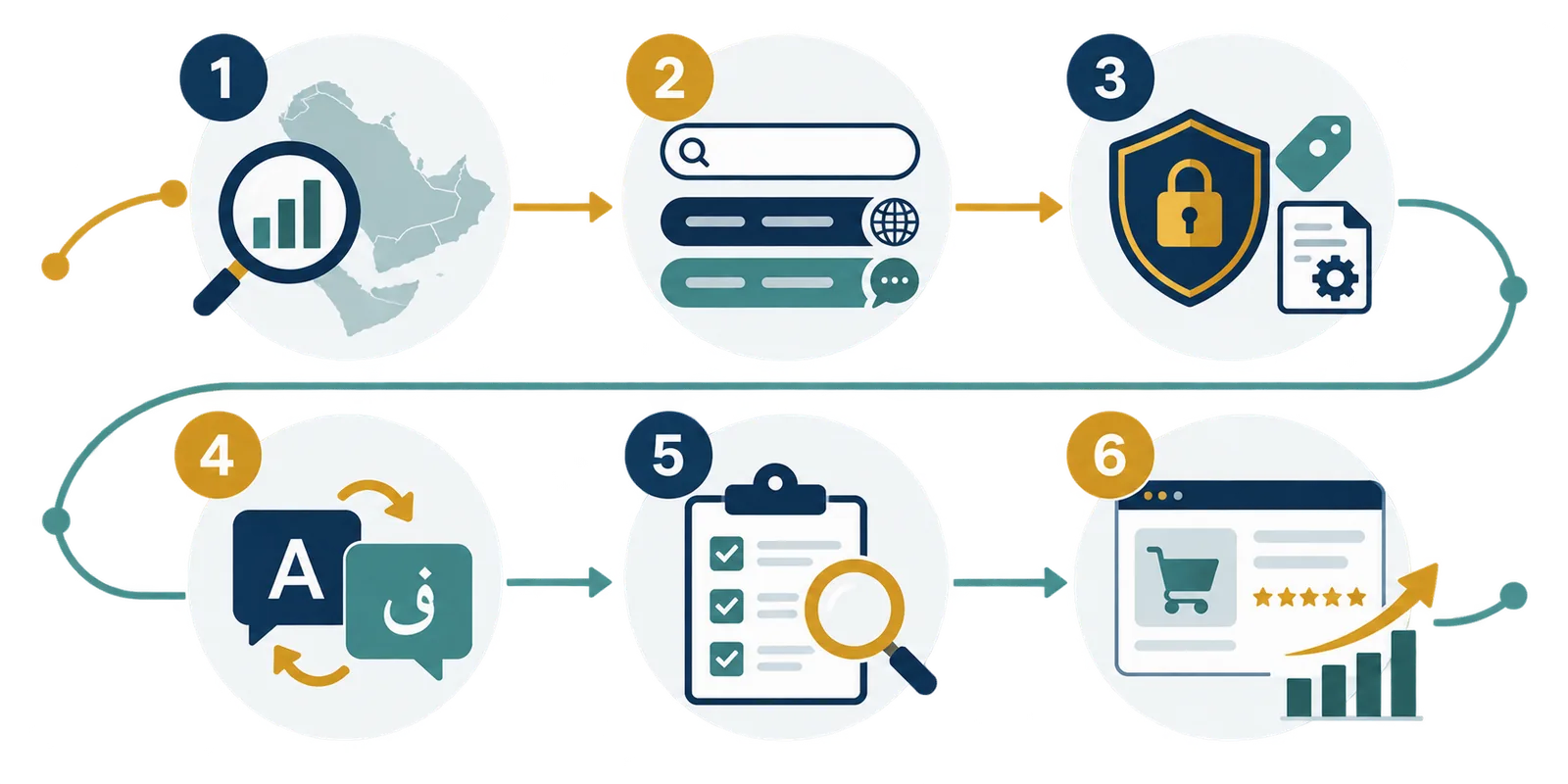
After publishing, monitor your search impressions, product-page visits, click-through rate, conversion rate, customer questions, returns and return reasons, and reviews mentioning unclear information. This information can reveal whether customers understand the listing and whether the translation matches their expectations.
Frequently Asked Questions
Can I translate an Amazon listing with AI?
Yes. AI can translate and localize product titles, features, bullet points, and descriptions quickly. You should still verify specifications, measurements, brand terminology, regulated claims, and marketplace requirements before publishing.
What is the difference between translation and localization?
Translation changes content from one language into another. Localization also adapts the terminology, keywords, measurements, tone, and selling points for customers in the target market.
How do I translate an Amazon listing from English to Arabic?
Collect the original listing, research relevant Arabic keywords, protect brand and model names, translate each section, verify all specifications, and review how the Arabic content appears after uploading.
Can Arabic product listing translation improve ranking?
Localization can improve relevance for Arabic searches and help customers understand the product. Rankings may also depend on sales, price, availability, reviews, delivery, advertising, and competition.
Can I use the same product description on Amazon and Noon?
You can use the same verified product information, but you should adapt the structure and formatting to each marketplace's current listing and category requirements.
Do I need to hire a professional translator?
Not for every standard product listing. AI can handle much of the initial translation and localization. However, native or specialist review is recommended for regulated products, technical items, major brands, and high-budget campaigns.
Translate Your Product Listing with Azan AI
Entering a new marketplace should not require rewriting every listing manually. Use the Azan AI Product Translation Tool to transform your existing content into localized marketplace copy.
Review the product details, refine your keywords, and prepare your listing for Amazon, Noon, and Arabic-speaking markets. Try Azan AI free and create your first localized product listing in minutes.
Azan AI community
Join the Conversation
Was this guide useful?
Comments
Have a question or an idea to add? Share it with the Azan AI community.
Loading comments…
Reference: Blog #2 — quote this number if you contact us about this article